
Website Lifecycle Management: The Complete Guide to Planning, Building, Maintaining, and Improving Websites
Introduction
A website is not a one-time project. It evolves alongside your business, customers, technology, and market expectations. New content is published, products are launched, security threats emerge, design trends change, and performance requirements continue to grow.
Organizations that treat websites as ongoing digital assets rather than completed projects are better positioned to deliver consistent user experiences and adapt to changing business needs.
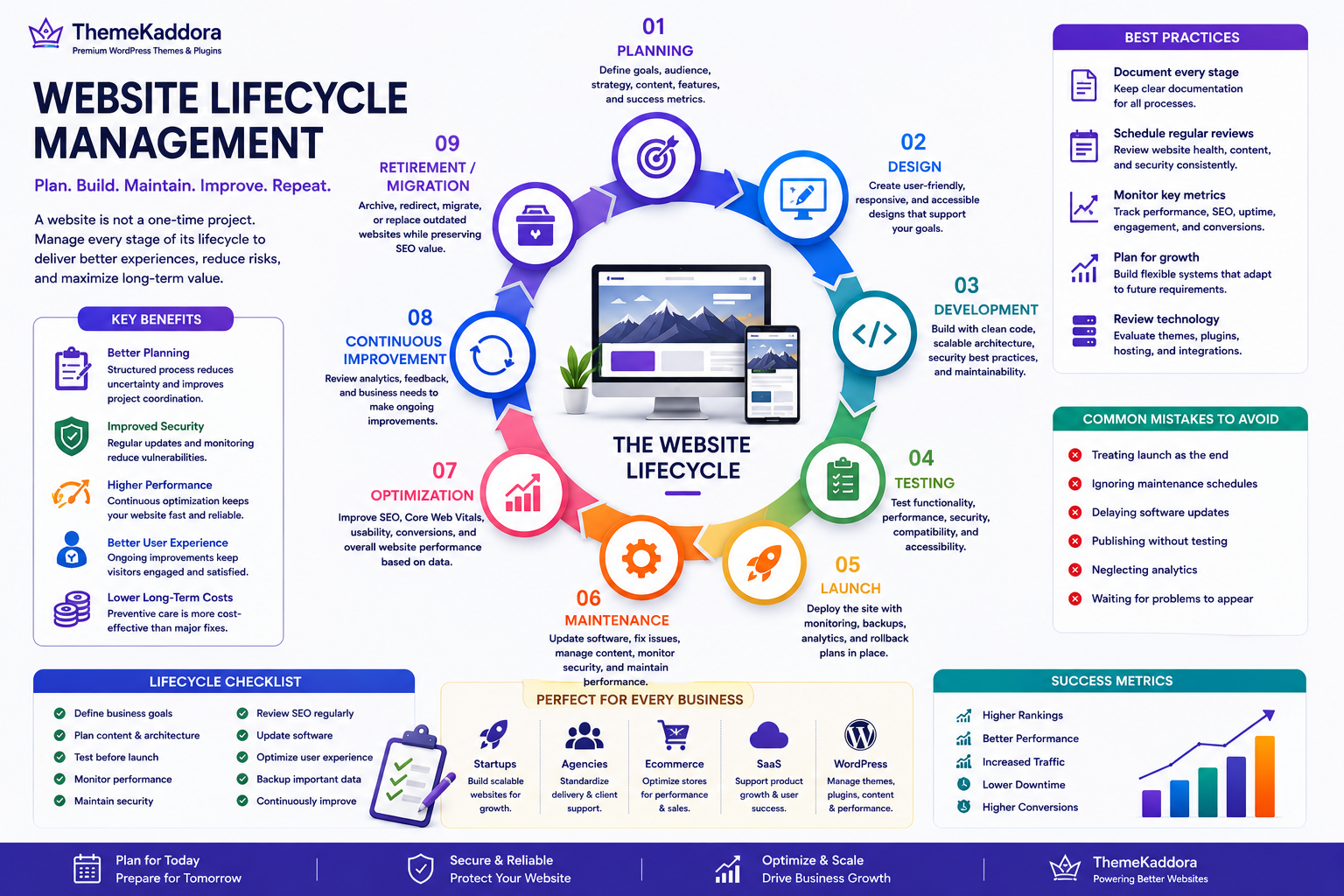
Website Lifecycle Management (WLM) is the structured process of planning, developing, launching, maintaining, optimizing, and eventually replacing or retiring a website. By managing every stage of the lifecycle, businesses can reduce risk, improve efficiency, and maximize long-term value.
Whether you operate a WordPress website, an ecommerce store, a SaaS platform, or a corporate website, Website Lifecycle Management helps ensure your digital presence remains secure, relevant, and effective.
What Is Website Lifecycle Management?
Website Lifecycle Management is the practice of overseeing every stage of a website's existence, from the initial concept through ongoing maintenance and future redesigns.
A complete lifecycle typically includes:
Planning
Design
Development
Testing
Launch
Maintenance
Optimization
Governance
Continuous improvement
Website retirement or migration
Each stage contributes to the long-term success of the website.
Why Website Lifecycle Management Matters
Organizations implement lifecycle management to:
Improve long-term planning
Maintain website quality
Reduce operational risks
Improve performance
Strengthen security
Support SEO
Extend website lifespan
Managing the full lifecycle helps organizations avoid reactive maintenance and expensive redesigns.
The Stages of Website Lifecycle Management
1. Planning
Define business objectives, target audiences, content strategy, technology requirements, and success metrics.
2. Design
Create accessible, responsive, and user-centered interfaces that support business goals.
3. Development
Build the website using maintainable code, secure practices, and scalable architecture.
4. Testing
Verify functionality, performance, accessibility, security, and compatibility before launch.
5. Launch
Deploy the website with monitoring, backups, analytics, and rollback plans in place.
6. Maintenance
Apply updates, fix issues, manage content, monitor security, and maintain performance.
7. Optimization
Improve SEO, accessibility, Core Web Vitals, user journeys, and conversion opportunities based on data.
8. Continuous Improvement
Review analytics, customer feedback, and business priorities to guide future enhancements.
9. Retirement or Migration
Archive, redirect, migrate, or replace outdated websites while preserving important content and SEO value where appropriate.
Benefits of Website Lifecycle Management
Better Planning
A structured lifecycle reduces uncertainty and improves project coordination.
Improved Security
Regular updates and monitoring reduce vulnerabilities.
Higher Performance
Continuous optimization helps maintain fast and reliable websites.
Better User Experience
Ongoing improvements keep websites useful and relevant.
Lower Long-Term Costs
Preventive maintenance is often more cost-effective than emergency fixes or complete rebuilds.
Website Lifecycle Management for Different Organizations
Startups
Plan scalable websites that support future growth without frequent redesigns.
Marketing Agencies
Standardize project delivery, maintenance, and client support across multiple websites.
Ecommerce Businesses
Manage product updates, promotions, performance optimization, and security throughout the website lifecycle.
SaaS Companies
Coordinate feature launches, documentation updates, onboarding resources, and customer feedback.
WordPress Websites
Manage themes, plugins, content, media, security, backups, performance, SEO, accessibility, and governance through every stage of the website lifecycle.
Best Practices
Document Every Stage
Maintain clear documentation for planning, development, deployment, and maintenance activities.
Schedule Regular Reviews
Review website health, performance, content, and security on a recurring basis.
Monitor Key Metrics
Track uptime, page speed, SEO, accessibility, conversions, and user engagement.
Plan for Growth
Build flexible systems that can adapt to new business requirements.
Review Technology
Regularly evaluate themes, plugins, hosting, integrations, and development practices.
Common Mistakes to Avoid
Avoid these common issues:
Treating launch as the end of the project
Ignoring maintenance schedules
Delaying software updates
Publishing without testing
Neglecting analytics
Waiting until major problems appear before improving the website
Website Lifecycle Management Checklist
Before managing your website lifecycle, make sure you:
✅ Define business goals
✅ Plan content and architecture
✅ Test before launch
✅ Monitor performance
✅ Maintain security
✅ Review SEO regularly
✅ Update software
✅ Optimize user experience
✅ Backup important data
✅ Continuously improve based on analytics
Why Choose Themekaddora?
Themekaddora develops WordPress themes that support every stage of the website lifecycle.
Our themes provide:
Lightweight architecture
Clean, maintainable code
SEO-friendly development
Responsive layouts
WooCommerce compatibility
Accessibility-conscious design
Fast loading performance
Flexible customization
Cross-browser compatibility
Regular updates
Professional support
These features help businesses create websites that remain reliable, scalable, and easier to maintain throughout their lifecycle.
Conclusion
Website Lifecycle Management ensures that websites continue delivering value long after launch. By managing planning, development, maintenance, optimization, governance, and future improvements as part of a continuous process, organizations can improve security, performance, user experience, and long-term business outcomes.
Whether you're running a WordPress website, an ecommerce platform, or a SaaS product, adopting a lifecycle management approach creates a stronger foundation for sustainable digital growth. Combined with Themekaddora's lightweight WordPress themes, it helps businesses build websites that are prepared for today's needs and tomorrow's opportunities.
Frequently Asked Questions (FAQs)
What is Website Lifecycle Management?
Website Lifecycle Management is the structured process of planning, building, launching, maintaining, optimizing, and eventually replacing or migrating a website throughout its lifetime.
Why is Website Lifecycle Management important?
It improves long-term planning, website quality, security, performance, user experience, and overall business value.
How does Website Lifecycle Management help WordPress websites?
It provides a structured approach to managing themes, plugins, content, security, backups, SEO, accessibility, performance, and ongoing improvements.
How often should a website lifecycle review be performed?
Most organizations benefit from reviewing website health, content, security, and performance on a regular schedule, with more comprehensive reviews conducted periodically as business needs evolve.
Why choose Themekaddora?
Themekaddora provides lightweight, SEO-friendly WordPress themes with clean code, responsive layouts, WooCommerce compatibility, accessibility-conscious design, fast performance, regular updates, and professional support—helping businesses build websites that remain maintainable, scalable, and high-performing throughout their lifecycle.
Comments (0)