
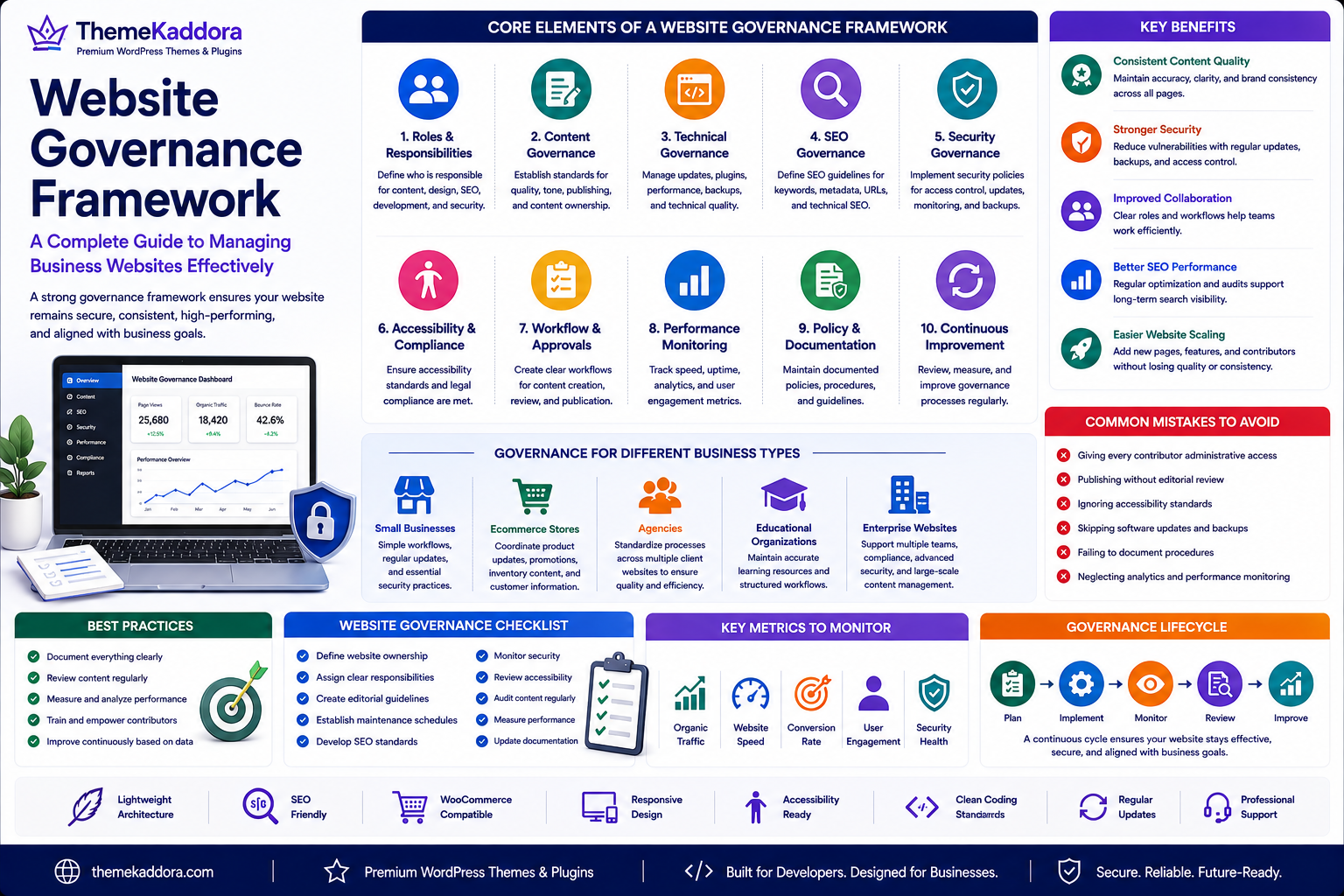
Website Governance Framework: A Complete Guide to Managing Business Websites Effectively
Introduction
A business website is more than a marketing tool—it's a digital asset that supports customer acquisition, brand reputation, communication, and business operations. As websites grow, they often involve multiple departments, contributors, and technologies. Without clear governance, maintaining consistency, security, and quality becomes increasingly difficult.
A Website Governance Framework provides the policies, roles, processes, and standards needed to manage a website effectively throughout its lifecycle. It helps teams publish accurate content, maintain technical quality, improve SEO, and reduce operational risks.
Whether you're managing a corporate website, an ecommerce platform, or a WordPress knowledge hub, a governance framework creates accountability and supports sustainable growth.
What Is a Website Governance Framework?
A Website Governance Framework is a structured system that defines how a website is managed, maintained, and improved over time.
It typically includes:
Roles and responsibilities
Content standards
Editorial workflows
Design guidelines
SEO policies
Security procedures
Maintenance schedules
Accessibility requirements
Performance monitoring
Compliance processes
The objective is to ensure the website remains accurate, secure, and aligned with business goals.
Why Website Governance Matters
Without governance, organizations often encounter:
Outdated content
Duplicate pages
Inconsistent branding
Security vulnerabilities
Poor user experience
Unclear ownership
Slow decision-making
Compliance risks
A governance framework reduces these issues by introducing consistent processes and accountability.
Core Elements of a Governance Framework
Roles and Responsibilities
Define who is responsible for content creation, approvals, technical maintenance, SEO, design, and security.
Content Governance
Establish editorial standards covering tone, style, publishing frequency, review cycles, and content ownership.
Technical Governance
Create procedures for:
Software updates
Plugin management
Performance optimization
Backup verification
Security monitoring
SEO Governance
Develop guidelines for:
Keyword research
Metadata
Internal linking
URL structure
Technical SEO reviews
Accessibility and Compliance
Ensure the website follows accessibility principles and relevant legal or organizational requirements.
Benefits of a Website Governance Framework
Consistent Content Quality
Editorial standards help maintain accuracy, clarity, and brand consistency.
Stronger Security
Defined maintenance and security procedures reduce vulnerabilities.
Improved Collaboration
Clear responsibilities make teamwork more efficient across departments.
Better SEO Performance
Regular reviews and optimization support long-term search visibility.
Easier Website Scaling
Governance makes it easier to add new content, features, and contributors without losing consistency.
Governance for Different Business Types
Small Businesses
Focus on simple approval workflows, regular updates, and essential security practices.
Ecommerce Stores
Coordinate product updates, promotional campaigns, inventory content, and customer information.
Agencies
Standardize processes across multiple client websites to improve efficiency and quality.
Educational Organizations
Maintain accurate learning resources and structured editorial workflows.
Enterprise Websites
Support multiple contributors, departments, compliance requirements, and large-scale content management.
Best Practices
Document Everything
Create written guidelines for publishing, maintenance, SEO, design, and security.
Review Content Regularly
Audit pages periodically to identify outdated information, broken links, or duplicate content.
Measure Performance
Track metrics such as:
Organic traffic
Website speed
Conversion rates
User engagement
Accessibility improvements
Train Contributors
Ensure everyone involved understands governance policies and publishing standards.
Improve Continuously
Review governance processes regularly and update them as business needs evolve.
Common Mistakes to Avoid
Avoid these common governance challenges:
Giving every contributor administrative access
Publishing without editorial review
Ignoring accessibility
Skipping software updates
Failing to document procedures
Neglecting analytics and performance monitoring
Website Governance Checklist
Before implementing governance, ensure you:
✅ Define website ownership
✅ Assign clear responsibilities
✅ Create editorial guidelines
✅ Establish maintenance schedules
✅ Develop SEO standards
✅ Monitor security
✅ Review accessibility
✅ Audit content regularly
✅ Measure website performance
✅ Update governance documentation
Why Choose Themekaddora?
Themekaddora develops WordPress themes that support professional website management and long-term digital success.
Our themes feature:
Lightweight architecture
SEO-friendly code
Responsive layouts
WooCommerce compatibility
Accessibility-ready design
Fast loading performance
Flexible customization
Cross-browser compatibility
Regular updates
Professional support
Combined with a well-designed Website Governance Framework, Themekaddora themes help businesses maintain secure, scalable, and high-performing websites.
Conclusion
A Website Governance Framework transforms website management from a reactive process into a proactive strategy. By defining responsibilities, standardizing workflows, and continuously monitoring quality, businesses can improve website performance, strengthen SEO, reduce risks, and create better experiences for users.
Whether you're managing a small business website or a large enterprise platform, investing in governance ensures your website continues to support your organization as it grows. Together with Themekaddora's modern WordPress themes, a governance framework provides the foundation for sustainable digital success.
Frequently Asked Questions
What is a Website Governance Framework?
A Website Governance Framework is a structured set of policies, processes, and responsibilities used to manage a website effectively throughout its lifecycle.
Why is website governance important?
It improves content quality, security, SEO, accessibility, collaboration, and long-term website performance.
Who should be involved in website governance?
Website governance typically involves content creators, editors, developers, designers, SEO specialists, marketers, IT teams, and business stakeholders.
How often should governance processes be reviewed?
Review governance practices regularly and whenever significant changes are made to the website, team structure, or business objectives.
Why choose Themekaddora?
Themekaddora offers lightweight, SEO-friendly WordPress themes with responsive design, WooCommerce compatibility, accessibility support, clean coding standards, regular updates, and professional support—making them an excellent choice for businesses focused on long-term website governance.
Comments (0)