
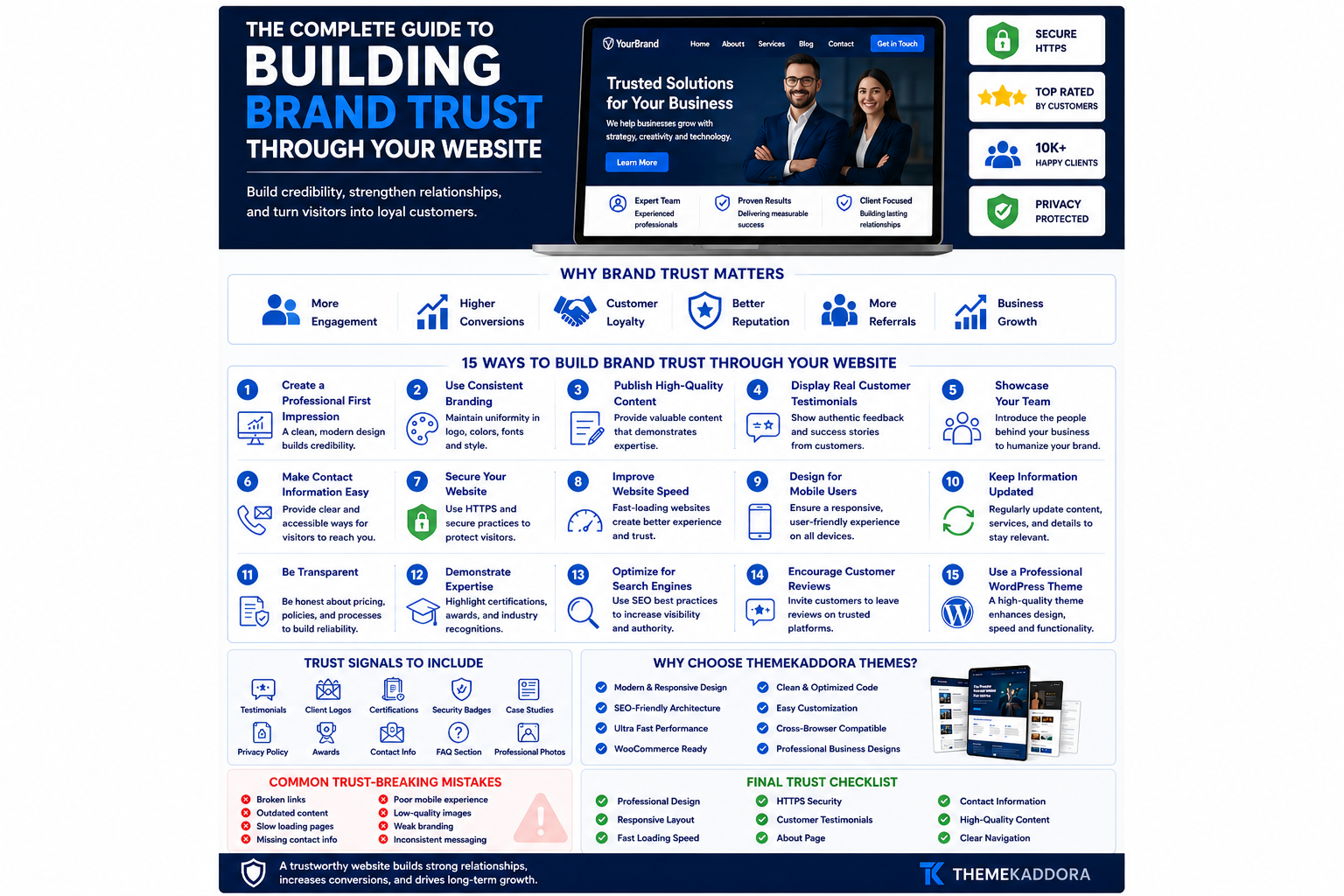
The Complete Guide to Building Brand Trust Through Your Website
Introduction
Imagine two companies offering the same product at a similar price. One has a modern, professional website with helpful content, customer reviews, secure browsing, and clear contact information. The other has an outdated design, broken links, and little information about the business.
Which company would you trust?
For most people, the answer is obvious.
Your website is often the first impression potential customers have of your business. Before they contact you, request a quote, or make a purchase, they evaluate whether your brand appears trustworthy.
Trust isn't built with one feature alone. It's created through consistent design, transparent communication, strong security, valuable content, and a smooth user experience.
This guide explores practical strategies for building brand trust through your website and explains how those improvements can support long-term business growth.
Why Brand Trust Matters
Trust influences every stage of the customer journey.
When visitors trust your business, they are more likely to:
Stay longer on your website
Explore additional pages
Subscribe to newsletters
Request quotes
Make purchases
Recommend your business
Return in the future
Trust supports both customer relationships and business performance.
What Makes a Website Trustworthy?
Visitors often evaluate a website using questions such as:
Does this business look professional?
Is the information clear and accurate?
Can I contact the company easily?
Is the website secure?
Do other customers recommend it?
Does the business appear active and reliable?
Answering these questions through your website helps reduce uncertainty.
1. Create a Professional First Impression
First impressions happen quickly.
Your homepage should communicate:
Who you are
What you offer
Who you help
Why customers should choose you
A clean, organized design immediately increases credibility.
2. Use Consistent Branding
Consistency helps visitors recognize and remember your business.
Maintain consistency in:
Logo
Colors
Typography
Icons
Images
Tone of voice
A unified brand identity reinforces professionalism.
3. Publish High-Quality Content
Helpful content demonstrates expertise.
Examples include:
Blog articles
Tutorials
Case studies
Industry insights
Frequently asked questions
Resource guides
Educational content positions your business as a reliable source of information.
4. Display Real Customer Testimonials
Customer feedback provides valuable social proof.
Include:
Written testimonials
Client success stories
Star ratings
Video testimonials (when available)
Authentic experiences help visitors feel more confident.
5. Showcase Your Team
People often trust people more than logos.
Introduce:
Leadership team
Employees
Company culture
Professional experience
Adding real faces helps humanize your brand.
6. Make Contact Information Easy to Find
Visitors should never struggle to reach your business.
Include:
Phone number
Email address
Contact form
Business location
Business hours
Accessible contact information demonstrates transparency.
7. Secure Your Website
Security is essential for building confidence.
A trustworthy website should include:
HTTPS encryption
Secure payment methods
Privacy policy
Regular software updates
Visitors are more comfortable interacting with secure websites.
8. Improve Website Speed
Performance affects trust.
Fast websites feel:
Professional
Reliable
Easy to use
Slow-loading websites can create frustration and reduce confidence.
9. Design for Mobile Users
Many customers browse using mobile devices.
Your website should provide:
Responsive layouts
Readable text
Simple navigation
Fast loading pages
Touch-friendly buttons
A positive mobile experience supports trust and usability.
10. Keep Information Updated
Outdated information can reduce credibility.
Regularly review:
Contact details
Services
Pricing (if displayed)
Blog content
Team information
Current information reassures visitors that your business is active.
11. Be Transparent
Honesty helps build lasting relationships.
Clearly explain:
Pricing (where appropriate)
Policies
Delivery expectations
Refund procedures
Business processes
Transparency reduces uncertainty.
12. Demonstrate Expertise
Show visitors why they should trust your knowledge.
Share:
Certifications
Awards
Industry memberships
Published research
Professional achievements
Relevant credentials strengthen credibility.
13. Optimize for Search Engines
Appearing in search results can reinforce legitimacy.
SEO best practices include:
Helpful content
Clear headings
Optimized images
Fast performance
Logical site structure
Search visibility and user trust often support each other.
14. Encourage Customer Reviews
Reviews help potential customers understand the experiences of others.
Invite satisfied customers to leave honest feedback on appropriate review platforms.
Authentic reviews contribute to stronger social proof.
15. Use a Professional WordPress Theme
Your theme influences both appearance and performance.
A high-quality theme should provide:
Responsive design
Fast loading speed
SEO-friendly code
Accessible navigation
Flexible customization
Professional design creates a stronger first impression.
Trust Signals Every Business Website Should Include
Consider adding:
Customer testimonials
Client logos
Industry certifications
Secure payment badges
Privacy policy
Case studies
Business awards
Contact information
Frequently asked questions
Professional photography
These elements help reassure visitors throughout their journey.
Why Businesses Choose Themekaddora Themes
Themekaddora WordPress themes are designed to help businesses present a professional and trustworthy online presence.
Key benefits include:
Modern responsive layouts
Fast loading performance
SEO-friendly architecture
WooCommerce compatibility
Clean HTML5 and CSS3 code
Flexible customization
Cross-browser compatibility
Professional business designs
These features support a polished user experience from the first visit.
Common Trust-Breaking Mistakes
Avoid:
Broken links
Outdated content
Slow loading pages
Missing contact information
Poor mobile experience
Low-quality images
Weak branding
Inconsistent messaging
Even small issues can affect visitor confidence.
Final Trust Checklist
Before publishing your website, verify that it includes:
✅ Professional design
✅ Responsive layout
✅ Fast loading speed
✅ HTTPS security
✅ Customer testimonials
✅ About page
✅ Contact information
✅ High-quality content
✅ Clear navigation
✅ Strong branding
Conclusion
Building brand trust isn't about adding one feature to your website—it's about creating a complete experience that reassures visitors at every step.
From professional design and valuable content to security, transparency, and responsive performance, every element contributes to how customers perceive your business.
A well-built WordPress website supported by a professional theme can strengthen credibility, improve user experience, and encourage more visitors to become loyal customers.
Themekaddora WordPress themes provide the responsive design, performance, flexibility, and modern aesthetics needed to help businesses create websites that inspire confidence and support long-term growth.
Frequently Asked Questions (FAQs)
Why is brand trust important for a website?
Brand trust encourages visitors to engage with your business, request information, make purchases, and become long-term customers.
What are website trust signals?
Trust signals include customer testimonials, reviews, certifications, secure browsing, clear contact information, case studies, and professional branding.
Does website speed affect trust?
Yes. Fast websites generally provide a smoother user experience, helping visitors feel more confident in your business.
How can I make my website look more professional?
Use consistent branding, responsive design, high-quality images, organized layouts, valuable content, and a well-structured navigation system.
Why choose Themekaddora WordPress themes?
Themekaddora themes combine responsive layouts, SEO-friendly architecture, fast performance, WooCommerce compatibility, and modern business-focused design to help create websites that build trust and support business growth.
Comments (0)