
SSL Certificates Explained: Why Every Website Needs HTTPS Security
Introduction
Website security has become one of the most important aspects of maintaining a successful online presence. Every day, millions of users submit passwords, payment information, contact details, and other sensitive data through websites. Without proper encryption, this information can potentially be intercepted during transmission.
SSL (Secure Sockets Layer) certificates help solve this problem by encrypting communication between a visitor's browser and a website. Modern implementations use TLS (Transport Layer Security), but the term "SSL certificate" remains widely used.
Whether you operate a personal blog, business website, eCommerce store, educational platform, or enterprise application, HTTPS has become an essential security standard.
What Is an SSL Certificate?
An SSL certificate is a digital certificate that enables encrypted communication between a website and its visitors.
When installed correctly, visitors will typically see:
HTTPS in the website address
A padlock icon in the browser
Encrypted communication
Improved visitor confidence
SSL certificates help verify website identity while protecting transmitted information.
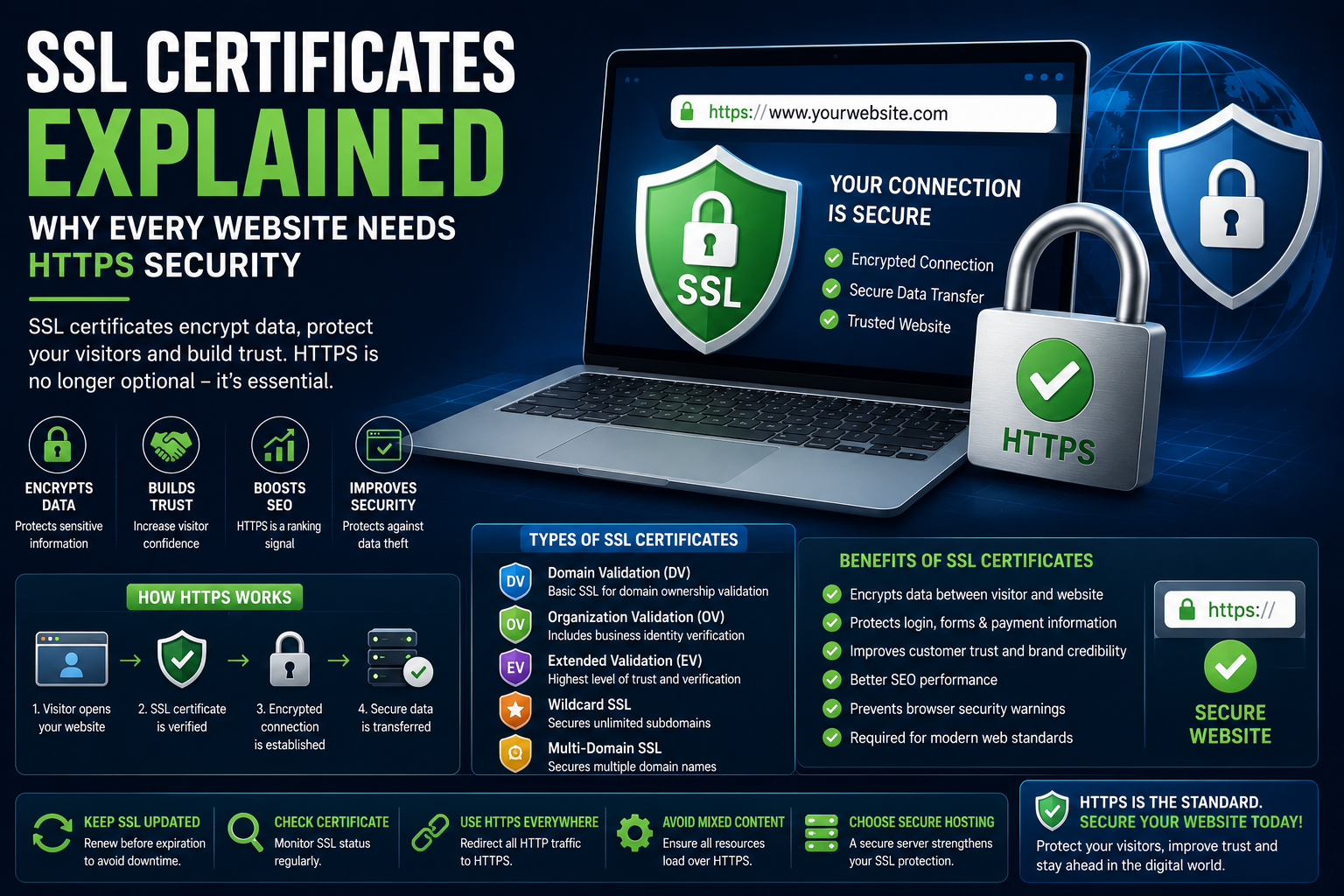
How HTTPS Works
HTTPS combines standard web communication with encryption.
A simplified process includes:
A visitor opens a secure website.
The website presents its SSL certificate.
The browser verifies the certificate.
An encrypted connection is established.
Information is securely transmitted.
This process helps protect sensitive information during transmission.
Why SSL Certificates Matter
SSL certificates provide several important benefits.
They help:
Encrypt sensitive data
Improve visitor trust
Protect login credentials
Secure payment information
Reduce interception risks
Support secure browsing
Encrypted communication has become an expected feature of modern websites.
Benefits of HTTPS
Using HTTPS offers advantages such as:
Secure data transmission
Improved customer confidence
Browser compatibility
Better protection for login forms
Secure online transactions
Stronger website reputation
Many browsers also identify websites without HTTPS as less secure.
Types of SSL Certificates
Different certificates serve different needs.
Common options include:
Domain Validation (DV)
Organization Validation (OV)
Extended Validation (EV)
Wildcard SSL Certificates
Multi-Domain SSL Certificates
The appropriate choice depends on your website and organizational requirements.
How SSL Protects Website Visitors
Encryption helps protect information including:
Login credentials
Contact form submissions
Payment information
Personal details
Session cookies
By encrypting transmitted data, SSL reduces the risk of unauthorized interception.
SSL and Search Engine Optimization
HTTPS contributes to a stronger technical foundation.
Benefits may include:
Improved visitor confidence
Better user experience
Modern browser compatibility
Support for technical SEO best practices
A secure website helps establish trust with both visitors and search engines.
SSL for WordPress Websites
Every WordPress website should use HTTPS.
Recommended practices include:
Enable HTTPS across the website.
Update internal links when necessary.
Keep WordPress updated.
Verify secure redirects.
Test forms and payment pages.
Maintaining a secure configuration helps provide a consistent browsing experience.
Common SSL Mistakes
Avoid common issues such as:
Expired SSL certificates
Mixed-content warnings
Incomplete HTTPS migration
Ignoring browser security notifications
Not renewing certificates on time
Routine monitoring helps prevent these problems.
Best Practices for SSL Security
Improve website security by:
Using HTTPS on every page.
Renewing certificates before expiration.
Monitoring certificate validity.
Updating website software.
Maintaining secure hosting.
Combining SSL with additional security measures.
SSL works best as part of a broader website security strategy.
Final Thoughts
SSL certificates have become an essential part of modern website security. By encrypting communication, protecting visitor information, and supporting secure browsing, HTTPS helps build trust while reducing security risks.
Whether you're managing a WordPress blog, business website, online store, or enterprise application, implementing SSL is one of the most effective steps toward creating a safer online experience. Combined with strong authentication, regular updates, backups, and ongoing monitoring, HTTPS forms an important part of a comprehensive website security strategy.
Frequently Asked Questions
What is an SSL certificate?
An SSL certificate encrypts communication between a website and visitors to help protect transmitted information.
What is HTTPS?
HTTPS is the secure version of HTTP that uses encryption to protect communication.
Does every website need SSL?
Yes. Websites that collect any visitor information benefit from HTTPS, and most modern websites use SSL regardless of their purpose.
Is SSL important for WordPress?
Yes. HTTPS helps secure administrator logins, customer interactions, and other sensitive communication.
Does SSL improve SEO?
HTTPS supports technical best practices and contributes to a secure, trustworthy website experience.
Comments (0)