
Modular Web Design: The Complete Guide to Building Flexible and Scalable Websites
Introduction
Modern websites are expected to evolve continuously. New pages, landing pages, marketing campaigns, products, and features are added regularly, making long-term maintenance increasingly challenging.
Building every page from scratch often leads to inconsistent layouts, duplicated code, and higher development costs.
Modular Web Design solves this challenge by breaking websites into reusable components that can be combined to create consistent, flexible, and scalable digital experiences.
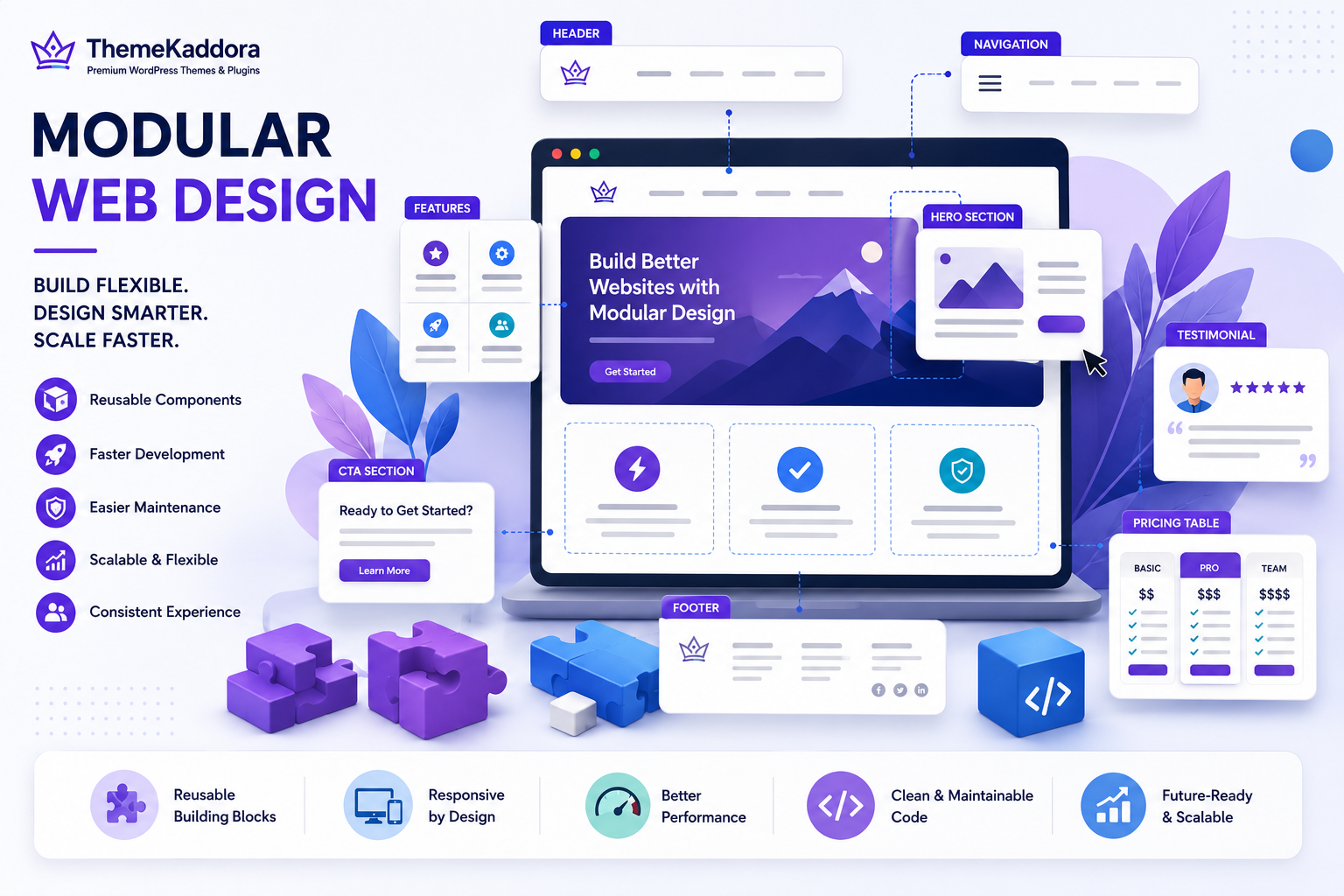
Instead of designing individual pages independently, teams create reusable building blocks such as headers, hero sections, cards, forms, testimonials, pricing tables, and call-to-action sections. These modules can then be reused across the website, improving efficiency while maintaining consistency.
Whether you're developing a WordPress website, an ecommerce store, a SaaS platform, or a corporate website, modular design supports long-term growth and maintainability.
What Is Modular Web Design?
Modular Web Design is an approach to website design and development that uses reusable interface components instead of building every page independently.
Common modules include:
Headers
Navigation bars
Hero sections
Feature grids
Content cards
Testimonials
Pricing tables
Contact forms
Footers
Call-to-action sections
Each module is designed to function independently while working consistently with other components.
Why Modular Web Design Matters
Organizations adopt modular design to:
Improve consistency
Reduce duplicate work
Simplify maintenance
Accelerate development
Support scalability
Improve collaboration
Reduce design and development costs
Reusable components make websites easier to expand without sacrificing quality.
Core Principles of Modular Web Design
Reusability
Components should work across multiple pages without requiring extensive modifications.
Consistency
Shared styles, spacing, typography, and interactions create a unified user experience.
Flexibility
Modules should adapt to different content and screen sizes while maintaining usability.
Maintainability
Updating a shared component improves every page that uses it.
Scalability
New pages and features can be built by combining existing modules rather than starting from scratch.
Benefits of Modular Web Design
Faster Development
Reusable components reduce repetitive design and coding work.
Easier Maintenance
Changes made to shared modules can improve multiple pages simultaneously.
Better User Experience
Consistent layouts and interactions help visitors navigate websites more confidently.
Improved Collaboration
Designers, developers, and content creators work from shared standards and components.
Long-Term Scalability
Growing websites remain easier to manage as content expands.
Modular Web Design for Different Organizations
Startups
Launch websites quickly using reusable layouts that support future growth.
Marketing Agencies
Build client websites more efficiently while maintaining consistent design quality.
Ecommerce Businesses
Reuse product cards, category layouts, promotional banners, and checkout components.
SaaS Companies
Standardize pricing pages, feature sections, onboarding content, documentation layouts, and customer portals.
WordPress Websites
Use reusable blocks, templates, patterns, widgets, and theme components to build scalable websites with consistent branding and simplified maintenance.
Best Practices
Design Components Before Pages
Build a library of reusable modules before creating complete page layouts.
Maintain Design Standards
Keep typography, colors, spacing, and interaction patterns consistent across every module.
Document Components
Provide usage guidelines for designers, developers, and content teams.
Review Components Regularly
Retire outdated modules and improve frequently used ones.
Test Across Devices
Ensure every module performs well on desktops, tablets, and smartphones.
Common Mistakes to Avoid
Avoid these common challenges:
Creating too many nearly identical components
Ignoring accessibility when building modules
Customizing reusable modules excessively
Failing to document component usage
Inconsistent naming conventions
Neglecting performance optimization
Modular Web Design Checklist
Before adopting modular design, make sure you:
✅ Create reusable UI components
✅ Define design standards
✅ Document component usage
✅ Test responsive behavior
✅ Optimize shared assets
✅ Maintain accessibility
✅ Review component performance
✅ Update modules consistently
✅ Remove duplicate designs
✅ Expand the component library as needed
Why Choose Themekaddora?
Themekaddora develops WordPress themes using modern development practices that support reusable layouts and long-term maintainability.
Our themes provide:
Lightweight architecture
Clean, reusable code
SEO-friendly development
Responsive layouts
WooCommerce compatibility
Accessibility-conscious design
Fast loading performance
Flexible customization
Cross-browser compatibility
Regular updates
Professional support
These features help businesses build modular WordPress websites that are easier to scale, maintain, and customize as requirements evolve.
Conclusion
Modular Web Design transforms websites from collections of individual pages into flexible systems built from reusable components. This approach improves consistency, accelerates development, reduces maintenance costs, and supports long-term scalability.
Whether you're creating a WordPress website, an ecommerce platform, or a SaaS product, adopting modular design principles helps teams build digital experiences that remain organized and adaptable. Combined with Themekaddora's lightweight WordPress themes, modular design provides a strong foundation for scalable, maintainable, and future-ready websites.
Frequently Asked Questions (FAQs)
What is modular web design?
Modular web design is a design and development approach that builds websites using reusable interface components instead of designing each page independently.
What are the benefits of modular web design?
Benefits include faster development, easier maintenance, improved consistency, better collaboration, and greater scalability.
Is modular web design suitable for WordPress?
Yes. WordPress supports modular development through reusable blocks, block patterns, widgets, templates, and custom theme components.
How is modular web design different from a design system?
A design system defines the standards, styles, and reusable elements used across products, while modular web design focuses on assembling websites from reusable functional components.
Why choose Themekaddora?
Themekaddora provides lightweight, SEO-friendly WordPress themes with reusable architecture, responsive layouts, WooCommerce compatibility, accessibility-conscious design, fast performance, regular updates, and professional support—helping businesses build modular and scalable WordPress websites.
Comments (0)