
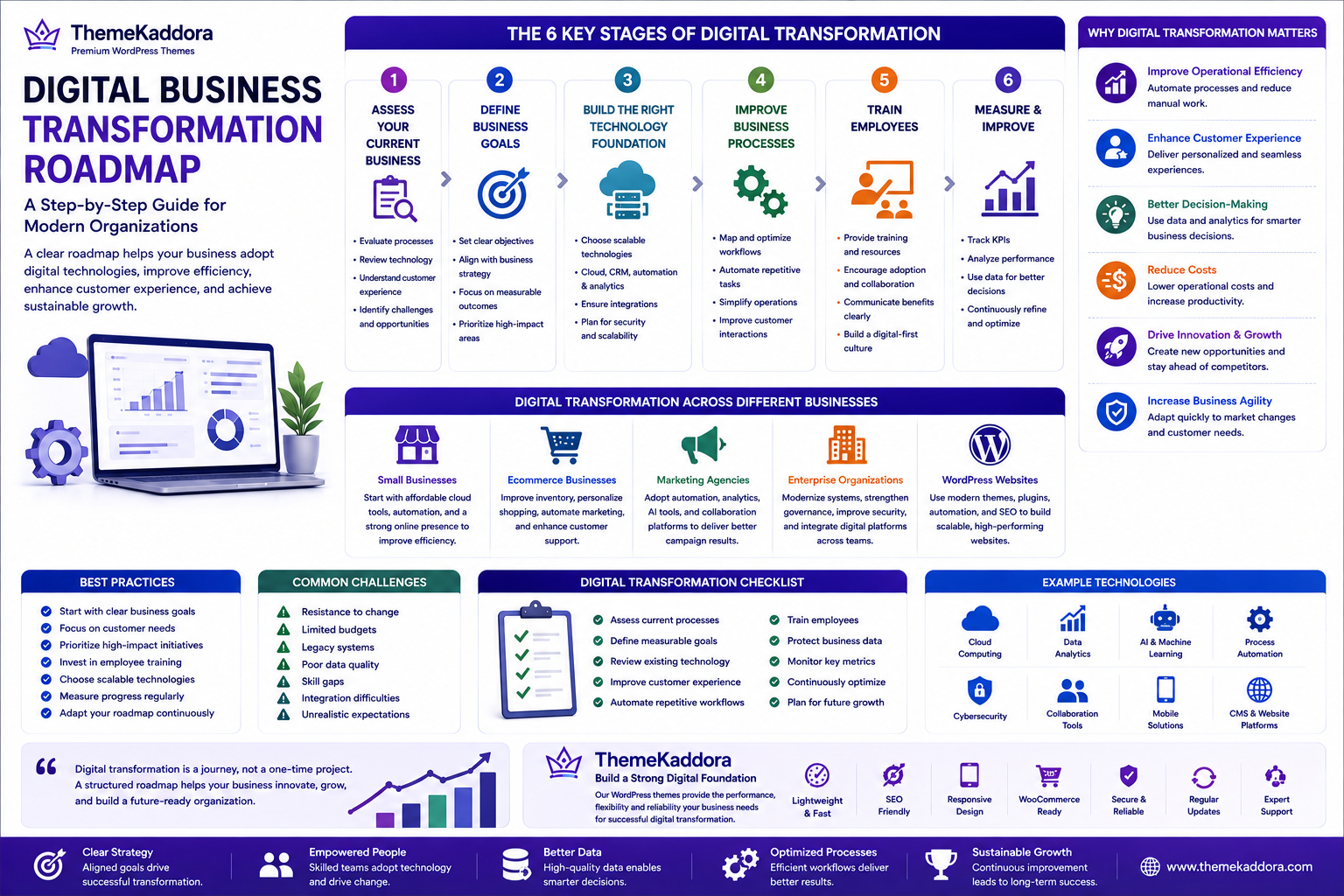
Digital Business Transformation Roadmap: A Step-by-Step Guide for Modern Organizations
Introduction
Digital transformation is no longer limited to large enterprises. Organizations of every size are adopting digital technologies to improve customer experiences, streamline operations, and remain competitive in rapidly changing markets.
However, successful transformation is not simply about purchasing new software or implementing artificial intelligence. It requires a clear strategy that aligns technology with business goals.
A Digital Business Transformation Roadmap provides a structured plan for moving from traditional business processes to more efficient, technology-driven operations. It helps organizations prioritize initiatives, manage change, and measure progress while reducing implementation risks.
Whether you're running a startup, an ecommerce business, a marketing agency, or a WordPress-powered company website, a well-defined roadmap creates a strong foundation for sustainable growth.
What Is a Digital Business Transformation Roadmap?
A Digital Business Transformation Roadmap is a strategic plan that outlines how an organization will adopt digital technologies and modern business practices over time.
A roadmap typically includes:
Business objectives
Current technology assessment
Customer experience improvements
Process optimization
Technology implementation
Employee training
Performance measurement
Continuous improvement
Rather than attempting large-scale changes all at once, a roadmap breaks transformation into manageable phases.
Why Digital Transformation Matters
Organizations invest in digital transformation to:
Improve operational efficiency
Deliver better customer experiences
Increase business agility
Support remote and hybrid work
Improve data-driven decision-making
Reduce operational costs
Encourage innovation
Businesses that continuously improve their digital capabilities are often better prepared for future opportunities and market changes.
Key Stages of a Digital Transformation Roadmap
1. Assess Your Current Business
Evaluate existing processes, technology, customer experiences, and business challenges.
Identify areas where digital improvements can create measurable value.
2. Define Business Goals
Set clear objectives such as:
Improving customer satisfaction
Increasing operational efficiency
Growing online sales
Automating repetitive tasks
Enhancing collaboration
Every technology investment should support a business objective.
3. Build the Right Technology Foundation
Choose scalable technologies that integrate well with your existing systems.
This may include:
Cloud services
CRM platforms
Automation tools
Analytics solutions
AI-powered applications
Modern WordPress websites
4. Improve Business Processes
Digital transformation is also about improving workflows.
Review repetitive tasks, approval processes, communication methods, and customer interactions to identify opportunities for automation and simplification.
5. Train Employees
Technology is most effective when employees understand how to use it.
Provide training, encourage collaboration, and communicate the benefits of digital transformation throughout the organization.
6. Measure and Improve
Track key performance indicators (KPIs) such as:
Customer satisfaction
Website performance
Conversion rates
Employee productivity
Operational costs
Use data to refine your strategy continuously.
Common Challenges
Businesses often encounter:
Resistance to change
Limited budgets
Legacy technology
Poor data quality
Skill gaps
Integration difficulties
Planning, communication, and phased implementation help reduce these challenges.
Best Practices
Start with clear business goals.
Focus on customer needs.
Prioritize high-impact improvements.
Invest in employee training.
Choose scalable technologies.
Measure progress regularly.
Adapt your roadmap as business needs evolve.
Digital Transformation Across Different Businesses
Small Businesses
Begin with affordable cloud tools, automation, and a professional online presence.
Ecommerce Businesses
Improve inventory management, personalized shopping experiences, digital marketing, and customer support.
Marketing Agencies
Adopt automation, collaboration platforms, analytics, and AI-assisted content workflows.
Enterprise Organizations
Modernize legacy systems, strengthen governance, improve cybersecurity, and integrate enterprise-wide digital platforms.
WordPress Websites
A modern WordPress website can support digital transformation through responsive design, SEO optimization, ecommerce capabilities, automation integrations, accessibility, and scalable content management.
Digital Transformation Checklist
Before starting your transformation journey, make sure you:
✅ Assess current business processes
✅ Define measurable goals
✅ Review existing technology
✅ Improve customer experience
✅ Automate repetitive workflows
✅ Train employees
✅ Protect business data
✅ Monitor key performance indicators
✅ Continuously optimize processes
✅ Plan for future growth
Why Choose Themekaddora?
Digital transformation begins with a reliable online presence.
Themekaddora WordPress themes help businesses build modern websites with:
Lightweight architecture
Fast loading performance
SEO-friendly code
Responsive layouts
WooCommerce compatibility
Flexible customization
Accessibility-conscious design
Clean HTML5 and CSS3 standards
Cross-browser compatibility
Regular updates
Professional support
These features provide businesses with a scalable digital foundation that supports long-term innovation and growth.
Conclusion
Digital Business Transformation is an ongoing journey rather than a one-time project. Organizations that combine clear objectives, modern technology, efficient processes, and continuous improvement are better positioned to adapt to changing customer expectations and market demands.
Whether you're managing a startup, an enterprise, or a WordPress website, following a structured roadmap helps reduce risk while creating new opportunities for innovation, efficiency, and sustainable business growth.
Frequently Asked Questions (FAQs)
What is a Digital Business Transformation Roadmap?
A Digital Business Transformation Roadmap is a strategic plan that guides organizations through adopting digital technologies, improving business processes, and achieving long-term growth.
Why is digital transformation important?
It helps businesses improve efficiency, enhance customer experiences, reduce costs, support innovation, and remain competitive.
How long does digital transformation take?
The timeline varies depending on business size, goals, and complexity. Most organizations implement digital transformation gradually through multiple phases.
Can small businesses benefit from digital transformation?
Yes. Small businesses can improve productivity, customer engagement, and operational efficiency by adopting modern digital tools and automation.
Why choose Themekaddora?
Themekaddora provides lightweight, SEO-friendly WordPress themes with responsive layouts, WooCommerce compatibility, fast performance, accessibility-conscious design, regular updates, and professional support—helping businesses build modern websites that support successful digital transformation.
Comments (0)