
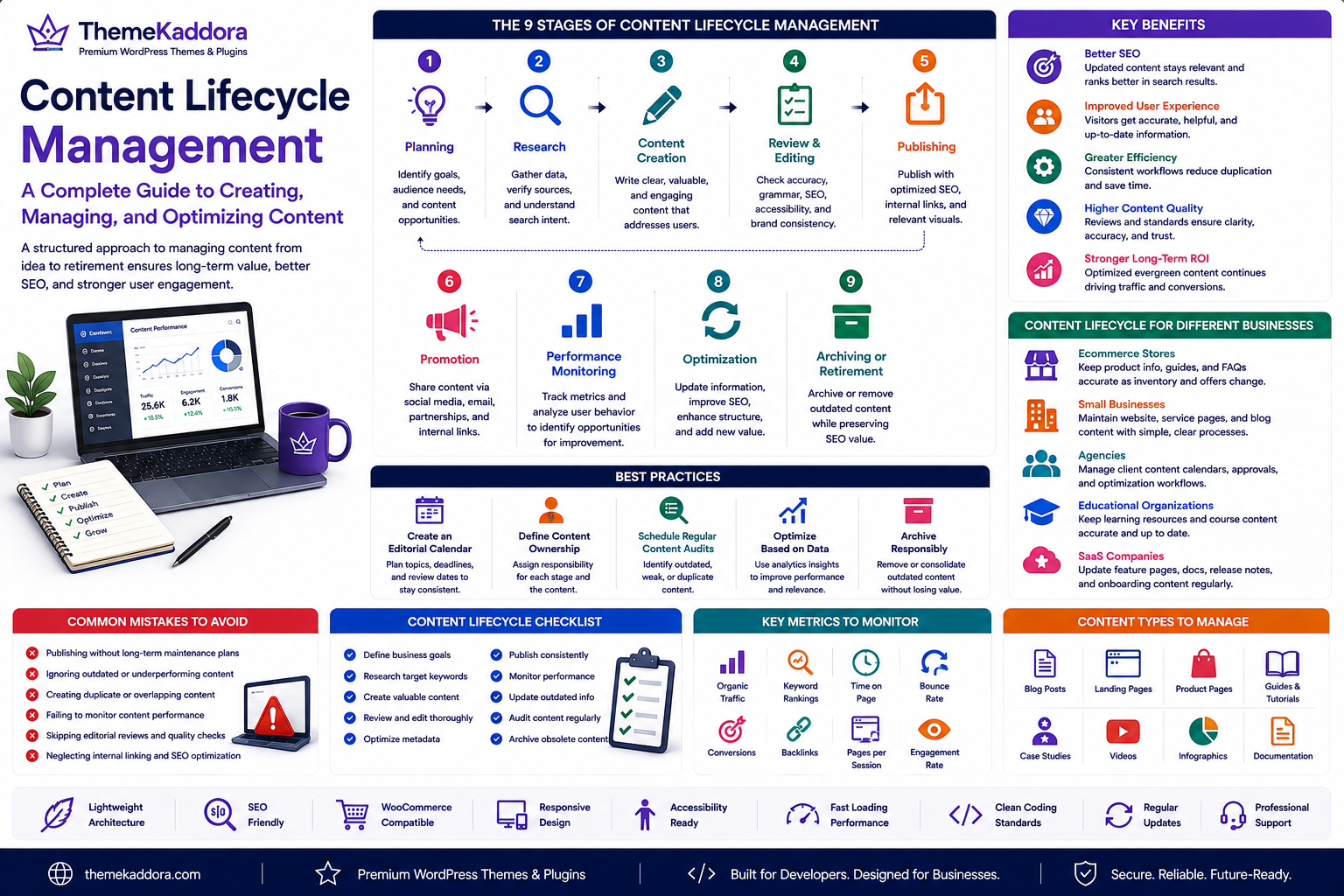
Content Lifecycle Management: A Complete Guide to Creating, Managing, and Optimizing Content
Introduction
Content is one of the most valuable digital assets a business owns. Blog posts, landing pages, product descriptions, videos, documentation, case studies, and guides all contribute to customer education, brand awareness, and search visibility. However, creating content is only the beginning.
Without a structured process, content becomes outdated, difficult to manage, and less effective over time. Broken links, inaccurate information, declining search rankings, and inconsistent messaging can reduce its value.
Content Lifecycle Management (CLM) provides a systematic approach to planning, creating, publishing, maintaining, optimizing, and retiring content. Instead of treating content as a one-time project, CLM ensures every piece continues to support business goals throughout its life.
Whether you manage a WordPress blog, an ecommerce website, or a corporate knowledge hub, understanding the content lifecycle helps improve SEO, user experience, and long-term content performance.
What Is Content Lifecycle Management?
Content Lifecycle Management is the process of managing content from its initial idea through publication, maintenance, optimization, and eventual retirement or archival.
The lifecycle generally includes:
Content planning
Research
Content creation
Editing and review
Publishing
Promotion
Performance monitoring
Content updates
Optimization
Archiving or removal
Each stage helps ensure that content remains useful, accurate, and aligned with business objectives.
Why Content Lifecycle Management Matters
Businesses that follow a structured content lifecycle can:
Improve search engine visibility
Maintain accurate information
Increase audience engagement
Reduce duplicate content
Strengthen brand consistency
Improve content ROI
Simplify editorial workflows
Content remains a valuable long-term business asset rather than becoming outdated or forgotten.
The Stages of Content Lifecycle Management
1. Planning
Identify audience needs, business goals, search intent, and target keywords before creating content.
2. Research
Gather reliable information, verify sources, and understand competitors to create valuable, trustworthy content.
3. Content Creation
Develop clear, informative, and engaging content that addresses user questions and supports business objectives.
4. Review and Editing
Check grammar, readability, factual accuracy, SEO elements, accessibility, and brand consistency before publishing.
5. Publishing
Publish content using a consistent structure, optimized metadata, internal links, and relevant visuals.
6. Promotion
Share content through email newsletters, social media, internal links, and partnerships to increase visibility.
7. Performance Monitoring
Track key metrics such as:
Organic traffic
Keyword rankings
Time on page
Bounce rate
Conversions
Backlinks
These insights help identify opportunities for improvement.
8. Optimization
Refresh content by updating statistics, improving examples, adding new sections, and enhancing SEO.
9. Archiving or Retirement
Retire or archive outdated content that no longer serves users or business goals while preserving SEO value where appropriate.
Benefits of Content Lifecycle Management
Better SEO
Regularly updated content is more likely to remain relevant and competitive in search results.
Improved User Experience
Visitors receive accurate, helpful, and up-to-date information.
Greater Efficiency
Editorial teams follow consistent workflows, reducing delays and duplication.
Higher Content Quality
Structured review processes improve accuracy, clarity, and readability.
Stronger Long-Term ROI
Evergreen content continues generating traffic and leads over time with periodic optimization.
Content Lifecycle Management for Different Businesses
Small Businesses
Maintain website pages, service descriptions, and blog posts without overwhelming limited resources.
Ecommerce Stores
Keep product descriptions, buying guides, and FAQs accurate as catalogs evolve.
Marketing Agencies
Manage client content calendars, approvals, and optimization workflows efficiently.
SaaS Companies
Update feature pages, release notes, onboarding guides, and documentation regularly.
WordPress Websites
Organize blog publishing, revisions, media management, and content updates through a structured process.
Best Practices
Create an Editorial Calendar
Plan content publication and review dates to maintain consistency.
Define Content Ownership
Assign responsibility for creating, reviewing, and updating each piece of content.
Schedule Regular Content Audits
Review older pages to identify opportunities for updates, consolidation, or removal.
Optimize Based on Data
Use analytics to improve headlines, structure, internal linking, and keyword targeting.
Archive Responsibly
Remove obsolete content carefully while preserving valuable URLs and search equity when possible.
Common Mistakes to Avoid
Avoid these common CLM challenges:
Publishing without long-term maintenance plans
Ignoring outdated articles
Creating duplicate content
Failing to monitor performance
Skipping editorial reviews
Neglecting internal linking
Content Lifecycle Management Checklist
Before publishing and maintaining content, make sure you:
✅ Define business goals
✅ Research target keywords
✅ Create valuable content
✅ Review and edit thoroughly
✅ Optimize metadata
✅ Publish consistently
✅ Monitor content performance
✅ Update outdated information
✅ Audit content regularly
✅ Archive obsolete content carefully
Why Choose Themekaddora?
Themekaddora develops WordPress themes built for businesses that value high-quality content, SEO performance, and long-term growth.
Our themes include:
Lightweight architecture
SEO-friendly code
Responsive layouts
WooCommerce compatibility
Accessibility-ready design
Fast loading performance
Flexible customization
Clean coding standards
Cross-browser compatibility
Regular updates
Professional support
Combined with a structured Content Lifecycle Management strategy, Themekaddora themes help businesses publish, manage, and optimize content that continues delivering value over time.
Conclusion
Content Lifecycle Management transforms content from a one-time marketing activity into an ongoing business asset. By planning strategically, publishing consistently, monitoring performance, and updating content regularly, organizations can improve SEO, strengthen customer trust, and maximize the long-term value of every article, page, or resource.
Whether you're managing a growing WordPress blog, an ecommerce website, or a corporate knowledge base, implementing CLM ensures your content remains relevant, discoverable, and impactful. Together with Themekaddora's modern WordPress themes, a structured content lifecycle provides the foundation for sustainable digital success.
Frequently Asked Questions
What is Content Lifecycle Management?
Content Lifecycle Management is the structured process of planning, creating, publishing, maintaining, optimizing, and eventually archiving content.
Why is Content Lifecycle Management important?
It helps businesses maintain accurate information, improve SEO, increase content quality, and maximize the long-term value of digital content.
How often should content be reviewed?
Review schedules vary by industry, but important pages and evergreen articles should be checked regularly to ensure accuracy and relevance.
Does Content Lifecycle Management improve SEO?
Yes. Regular updates, content audits, optimization, and internal linking help maintain search visibility and improve user experience.
Why choose Themekaddora?
Themekaddora provides lightweight, SEO-friendly, responsive WordPress themes with WooCommerce compatibility, accessibility support, fast performance, clean coding standards, regular updates, and professional support—making them an excellent choice for businesses focused on long-term content success.
Comments (0)