
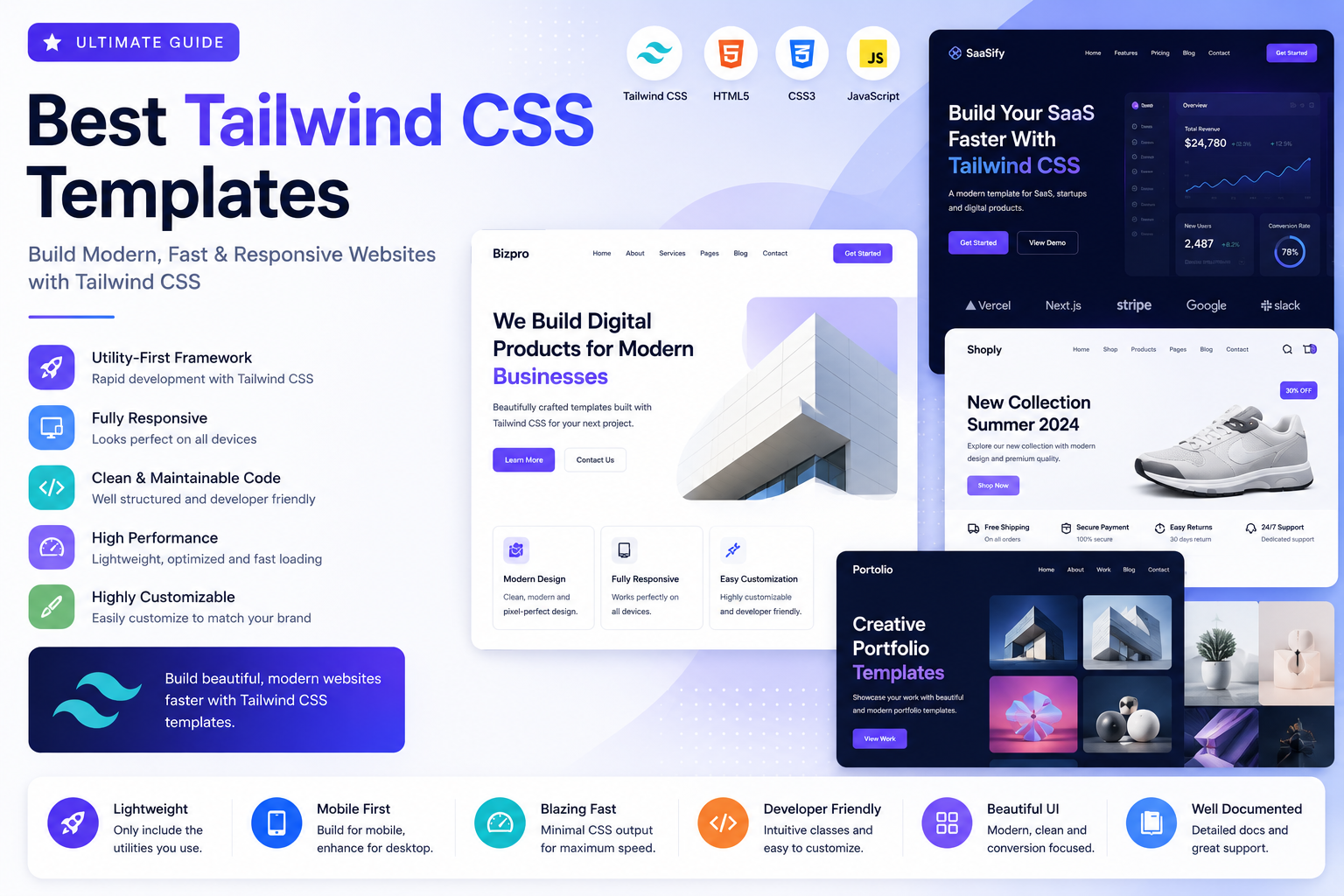
Best Tailwind CSS Templates for Building Modern Websites
Introduction
Tailwind CSS has transformed front-end development by introducing a utility-first approach to styling websites. Instead of relying on large collections of predefined UI components, developers build custom interfaces using small, reusable utility classes. This methodology encourages clean, maintainable code while allowing complete design flexibility.
To accelerate development, many developers start with Tailwind CSS templates. These templates include professionally designed layouts, reusable UI components, responsive grids, navigation systems, landing pages, dashboards, blogs, portfolios, and complete website kits. They eliminate repetitive design work and allow teams to focus on building features instead of recreating common page structures.
Tailwind CSS templates are widely used for SaaS products, startup websites, corporate portals, online stores, portfolios, agency websites, dashboards, educational platforms, healthcare systems, and financial applications. Whether you're launching a new business or developing a client project, selecting the right template can significantly reduce development time.
This guide explains what Tailwind CSS templates are, their advantages, and the key factors to evaluate before choosing one.
What Are Tailwind CSS Templates?
Tailwind CSS templates are pre-designed website layouts built using the Tailwind CSS framework.
Most templates include:
Responsive layouts
Navigation bars
Hero sections
Pricing tables
Contact forms
Authentication pages
Dashboards
Blog pages
Portfolio layouts
Reusable UI components
These templates provide a ready-made structure that can be customized for different projects.
Why Tailwind CSS Is Popular
Tailwind CSS has gained widespread adoption because it offers:
Utility-first styling
Responsive design tools
Lightweight output
High customization
Excellent developer experience
Strong ecosystem
Consistent design workflow
These advantages make it suitable for projects ranging from simple landing pages to enterprise web applications.
Benefits of Tailwind CSS Templates
Using Tailwind CSS templates can help you:
Launch projects faster
Maintain design consistency
Reduce repetitive coding
Improve responsiveness
Create modern user interfaces
Simplify long-term maintenance
Templates also encourage reusable design systems across multiple projects.
Types of Tailwind Templates
Popular categories include:
Business
Corporate
SaaS
Startup
Agency
Portfolio
Landing Page
Dashboard
Admin Panel
eCommerce
Education
Healthcare
Finance
Real Estate
Travel
Restaurant
Selecting a template designed for your industry often reduces customization work.
Business Templates
Business templates generally include:
Hero banners
Services
Team profiles
Testimonials
Contact forms
They help organizations present a professional online presence.
SaaS Templates
SaaS templates commonly feature:
Product showcases
Pricing plans
Feature comparisons
Integration sections
Demo request forms
These layouts are designed to support software companies and subscription-based businesses.
Startup Templates
Startup templates often include:
Product launch pages
Growth metrics
Investor information
Team introductions
Newsletter signups
Their flexible layouts adapt as businesses evolve.
Landing Page Templates
Landing page templates focus on:
Strong headlines
Call-to-action buttons
Benefit sections
Social proof
Lead generation forms
These pages are optimized for marketing campaigns and product launches.
Admin Dashboard Templates
Dashboard templates commonly provide:
Charts
Tables
User management
Analytics
Reports
Notifications
They are suitable for SaaS products, CRMs, ERPs, and business applications.
Portfolio Templates
Portfolio templates showcase creative work through:
Project galleries
Case studies
Image sliders
Client testimonials
Ideal for freelancers, designers, developers, and agencies.
eCommerce Templates
Tailwind eCommerce templates typically include:
Product grids
Product pages
Shopping carts
Checkout layouts
Customer accounts
These templates accelerate modern online store development.
Blog Templates
Blog templates prioritize:
Readable typography
Category pages
Author profiles
Related posts
Search functionality
They support content-focused websites and publishers.
Performance Benefits
Tailwind CSS is known for efficient styling.
Look for templates that emphasize:
Optimized CSS output
Lightweight assets
Clean HTML
Responsive images
Accessibility
Performance contributes to a better user experience.
Responsive Design
Responsive templates should adapt seamlessly across:
Smartphones
Tablets
Laptops
Desktop computers
Testing on multiple devices helps ensure consistent usability.
How to Choose the Right Tailwind CSS Template
Before selecting a template, evaluate:
Code quality
Documentation
Responsiveness
Accessibility
Browser compatibility
Performance
Component library
Licensing
Update history
Choose a template that matches both your current and future project requirements.
Common Mistakes to Avoid
Avoid:
Choosing based only on appearance
Ignoring documentation
Overlooking accessibility
Using outdated framework versions
Forgetting mobile testing
A careful evaluation process results in more maintainable projects.
Best Practices
Keep Tailwind CSS updated.
Customize your design system.
Optimize images and assets.
Test responsiveness regularly.
Maintain reusable components.
Monitor performance after deployment.
Final Thoughts
Tailwind CSS templates provide an excellent starting point for building fast, responsive, and highly customizable websites. By choosing templates with clean code, modern design practices, and strong documentation, developers can accelerate project delivery while maintaining flexibility for future growth.
Frequently Asked Questions
What is a Tailwind CSS template?
A Tailwind CSS template is a pre-designed website or application layout built using the Tailwind CSS framework.
Are Tailwind CSS templates responsive?
Yes. Most modern Tailwind templates use a mobile-first approach and adapt to different screen sizes.
Can Tailwind CSS templates be customized?
Yes. Colors, spacing, typography, layouts, and components can all be customized.
Who should use Tailwind CSS templates?
Developers, startups, agencies, SaaS companies, freelancers, and businesses building modern web applications.
Do Tailwind CSS templates support SEO?
A well-structured template provides a solid technical foundation, while overall SEO also depends on content quality, performance, and optimization.
Comments (0)