
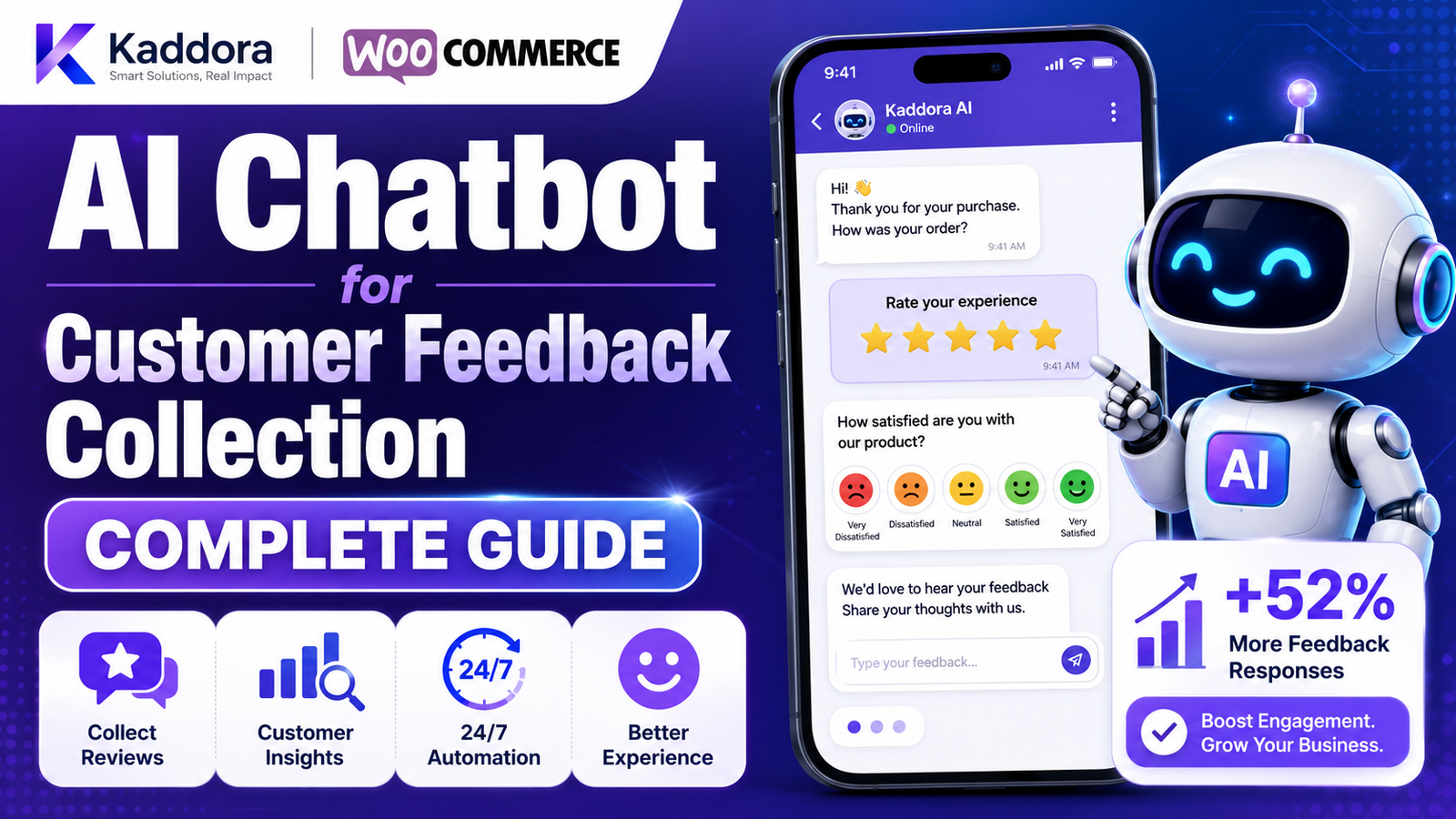
AI Chatbot for Customer Feedback Collection
Customer feedback is one of the most valuable sources of information for improving products, services, and the overall shopping experience. However, many businesses struggle to collect meaningful feedback because traditional surveys often receive low response rates or are sent too late to capture useful insights.
AI chatbots offer a more conversational way to request feedback. Instead of presenting long forms, they can ask short, relevant questions at appropriate moments in the customer journey.
In this guide, you'll learn how AI chatbots support customer feedback collection, common use cases, best practices, and how WooCommerce and eCommerce businesses can use conversational feedback to make informed decisions.
Quick Answer
What is an AI chatbot for customer feedback collection?
An AI chatbot for customer feedback collection is a conversational assistant that asks customers for opinions, satisfaction ratings, product reviews, and improvement suggestions. Depending on the platform, it can collect responses, organize feedback, and integrate with analytics or CRM systems for further analysis.
Why Customer Feedback Matters
Listening to customers helps businesses understand:
What customers like
Where customers face problems
Which products perform well
How support can improve
What features customers request
Opportunities to enhance the buying experience
Regular feedback supports continuous improvement across products and services.
How AI Chatbots Collect Feedback
1. Post-Purchase Surveys
After an order is delivered, a chatbot can ask questions such as:
How was your shopping experience?
Was the delivery satisfactory?
Did the product meet your expectations?
Short conversational surveys are often easier for customers to complete than lengthy questionnaires.
2. Customer Satisfaction Ratings
Chatbots can request simple satisfaction ratings, for example:
Rate your experience from 1–5.
Was this conversation helpful?
Would you recommend our store?
These responses can help businesses monitor service quality over time.
3. Product Reviews
Customers can be invited to share their opinions about purchased products.
Feedback may include:
Product quality
Ease of use
Packaging
Value for money
Overall experience
Businesses should encourage honest reviews without influencing customer opinions.
4. Support Experience Feedback
After a customer support interaction, the chatbot can ask:
Was your issue resolved?
Was the response helpful?
How could we improve?
This provides useful insights into support performance.
5. Feature Requests and Suggestions
Customers often have ideas for improvements.
A chatbot can ask open-ended questions such as:
What would you like us to improve?
Is there a feature you'd like to see?
Was anything missing from your experience?
These suggestions can inform future product and service decisions.
6. Exit Feedback
If a visitor leaves without making a purchase, a chatbot can politely ask:
Was there anything preventing you from completing your purchase?
Did you find the information you needed?
Understanding these reasons can help identify friction points in the shopping journey.
Benefits for Businesses
Using AI chatbots for feedback collection can help businesses:
Gather customer insights more consistently
Improve customer engagement
Identify recurring issues
Prioritize product and service improvements
Monitor customer satisfaction trends
Support data-informed business decisions
The value of collected feedback depends on how consistently businesses review and act on it.
Best Practices
Ask at the Right Time
Request feedback after meaningful interactions, such as:
Order delivery
Customer support conversations
Product usage
Completed purchases
Timing can significantly influence response quality.
Keep Questions Short
Limit conversations to a few focused questions to encourage higher participation.
Respect Customer Privacy
Explain how feedback will be used and handle customer data in accordance with applicable privacy laws and your privacy policy.
Review Feedback Regularly
Collecting feedback is only the first step. Analyze responses regularly to identify recurring themes and opportunities for improvement.
Close the Loop
Where appropriate, let customers know when their feedback has contributed to meaningful changes. This can help build trust and encourage future participation.
Common Mistakes
Avoid these common issues:
Asking too many questions
Requesting feedback too frequently
Ignoring customer suggestions
Failing to analyze collected responses
Using leading or biased questions
A respectful and balanced approach encourages more honest feedback.
Example Feedback Journey
A customer receives their WooCommerce order.
Two days later, they visit your website.
The chatbot greets them:
"Hi! We hope you're enjoying your recent purchase. Would you mind answering three quick questions about your experience?"
The customer rates their satisfaction, leaves a short product review, and suggests improving delivery notifications.
The business reviews this feedback alongside other customer responses to identify improvement opportunities.
Which Businesses Benefit Most?
Customer feedback chatbots are valuable for:
WooCommerce stores
SaaS companies
Retail businesses
Subscription services
Healthcare providers
Educational platforms
Hospitality businesses
Professional service firms
Manufacturing companies
Digital agencies
Any business that wants to better understand customer experiences can benefit from structured feedback collection.
Related Articles
Continue exploring AI chatbots:
Beginner Guides
What Is an AI Chatbot for WooCommerce?
Benefits of AI Chatbots for eCommerce
AI Chatbot Use Cases for Online Stores
AI Chatbot Trends for eCommerce
Business Growth
AI Chatbot for Lead Generation
AI Chatbot for Product Recommendations
AI Chatbot for Abandoned Cart Recovery
AI Chatbot for Order Tracking
Reduce Customer Support Costs Using AI Chatbots
How to Add an AI Chatbot to WooCommerce
Frequently Asked Questions
Can AI chatbots collect customer reviews?
Yes. Many AI chatbot platforms allow businesses to request product reviews and customer feedback through conversational interactions.
Is conversational feedback better than traditional surveys?
It depends on the audience and implementation. Conversational feedback may feel more natural for some users, while traditional surveys may be better suited for detailed research.
Can feedback be integrated with CRM systems?
Many chatbot platforms support integrations with CRM and analytics tools, although available features vary by provider.
Should businesses respond to customer feedback?
Yes. Reviewing and responding to feedback—especially when customers report issues—can help improve customer relationships and identify areas for improvement.
How often should businesses request feedback?
Ask for feedback after meaningful interactions, but avoid requesting it so frequently that customers experience survey fatigue.
Final Thoughts
Customer feedback is one of the most effective ways to understand what your business is doing well and where improvements are needed.
AI chatbots make the feedback process more conversational, accessible, and convenient for customers while helping businesses gather structured insights they can review over time. The greatest value comes not just from collecting feedback, but from acting on it.
If you're building a WooCommerce store, the Kaddora AI Chatbot Plugin is being developed to help merchants collect customer feedback, gather product reviews, improve support interactions, and integrate conversational insights into broader WooCommerce workflows.
Comments (0)